

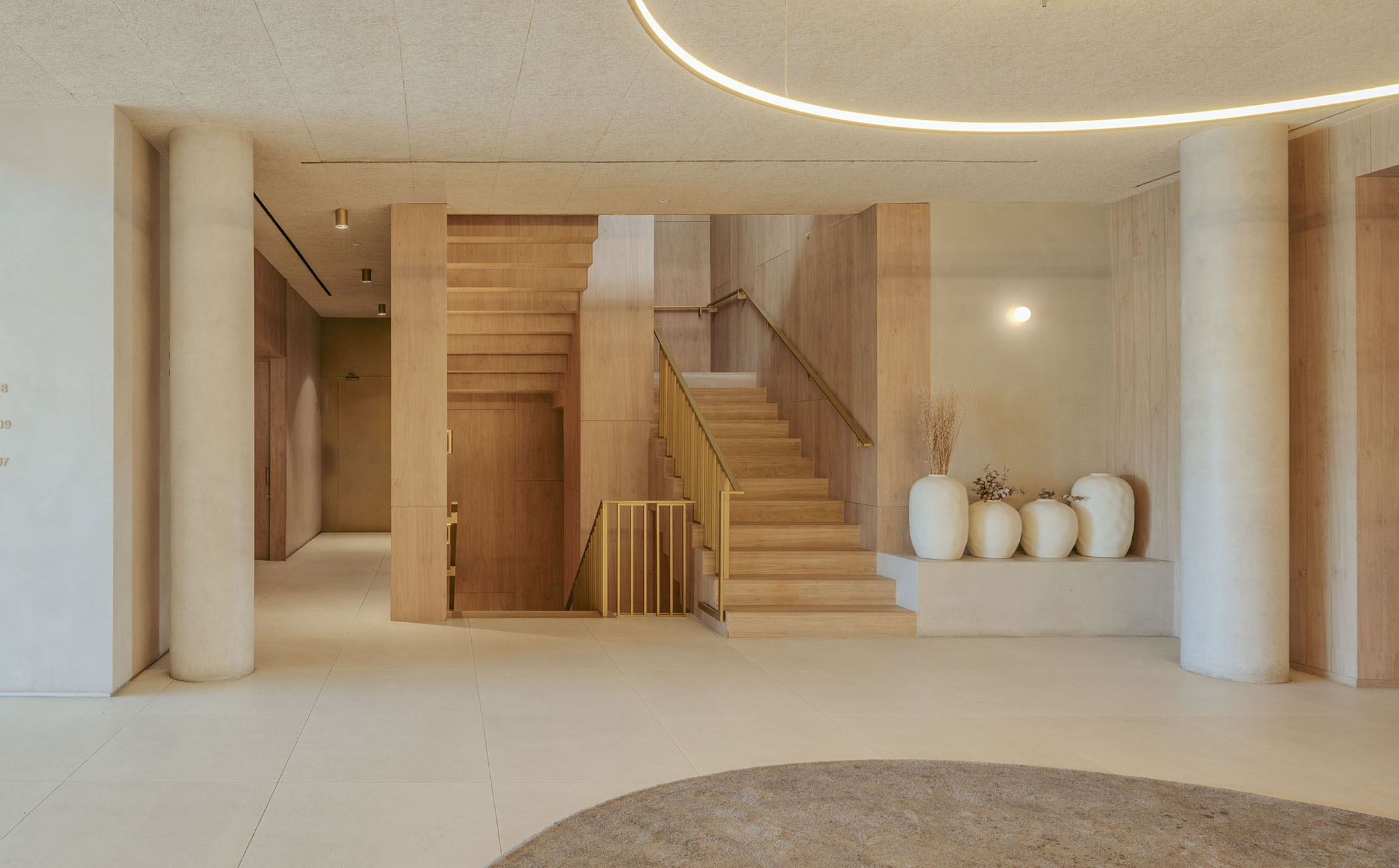
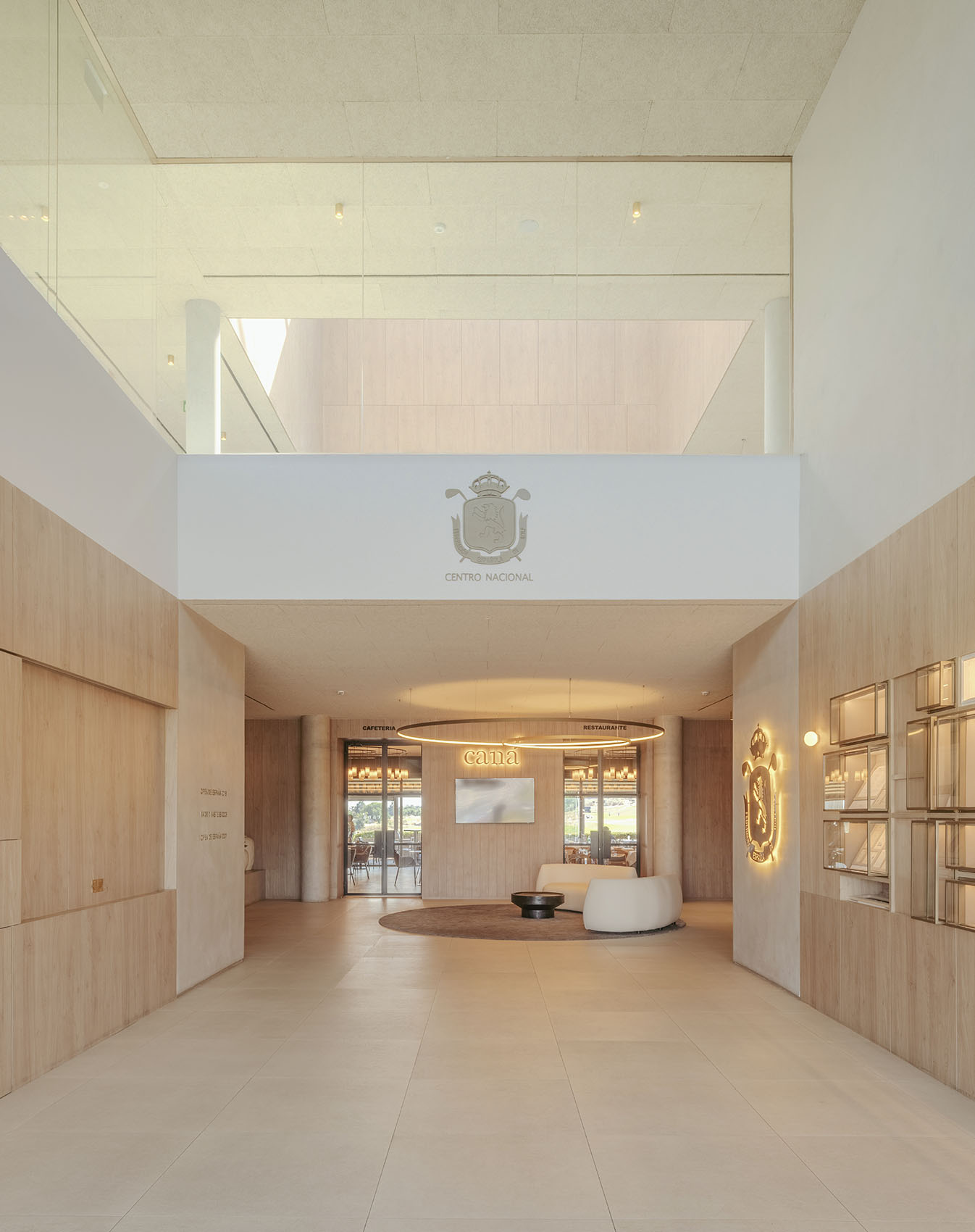
A place of transit that ceases to be a mere passageway and turns into a space for experimentation, where material and spatial decisions begin to unveil the building’s new character.
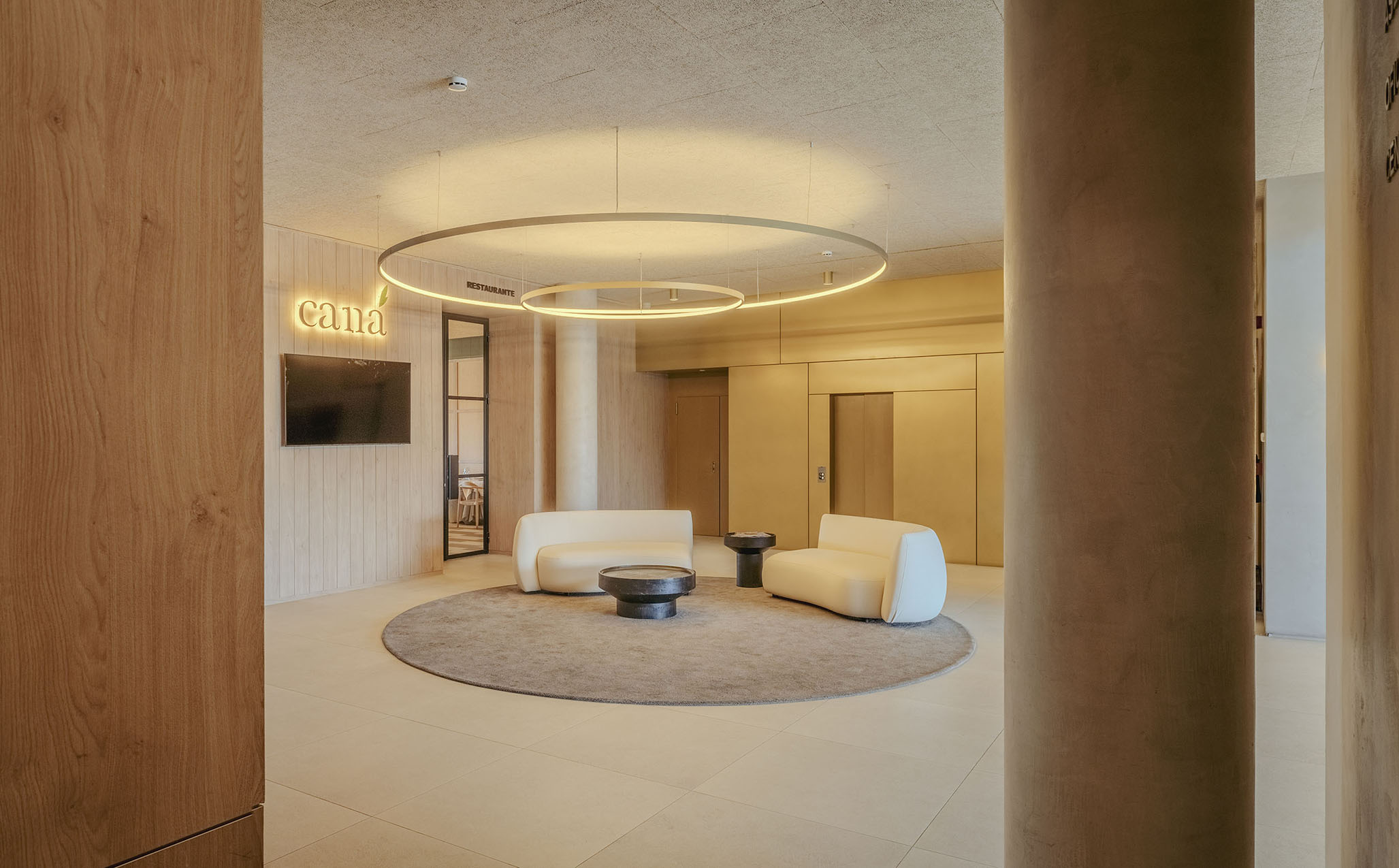
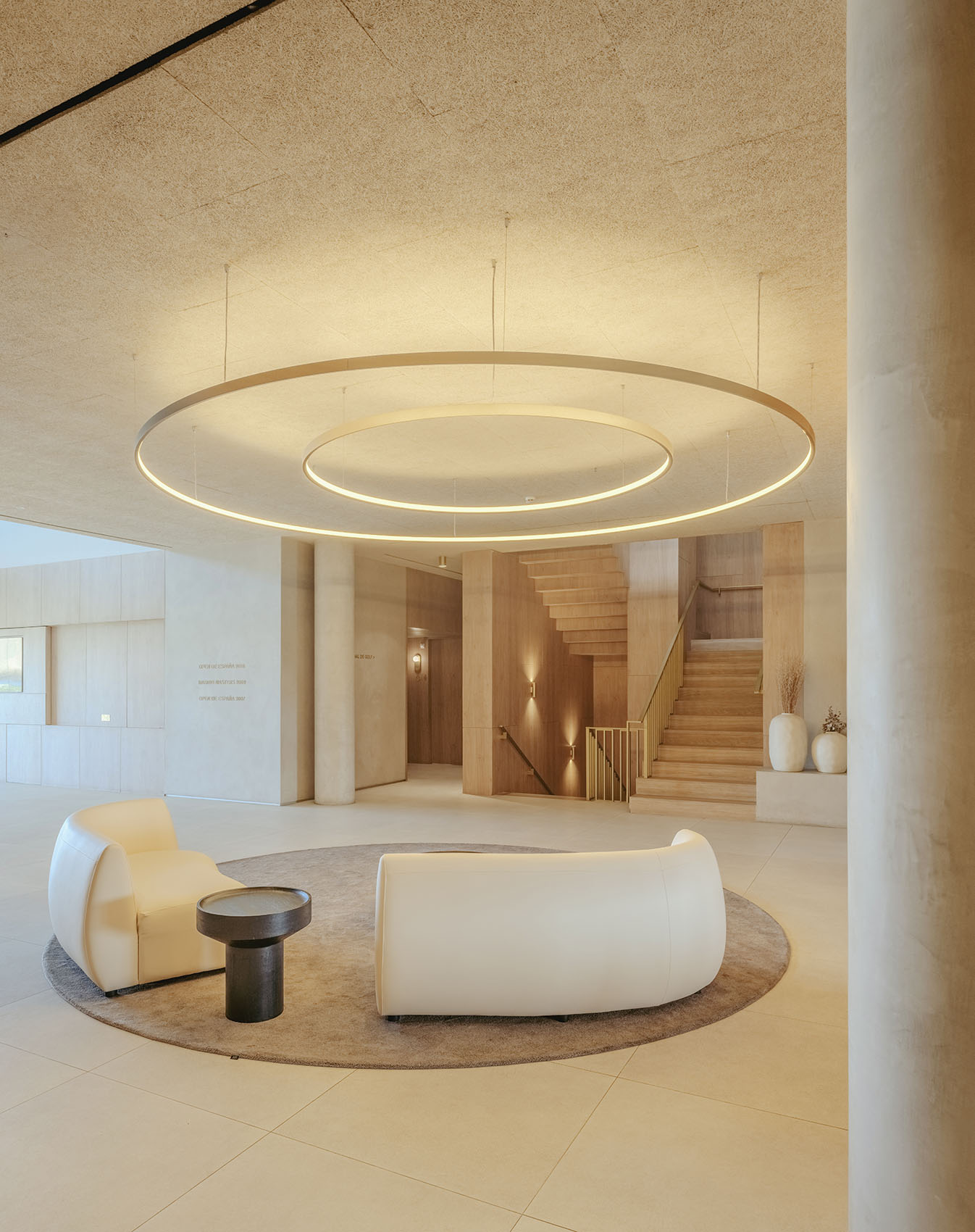
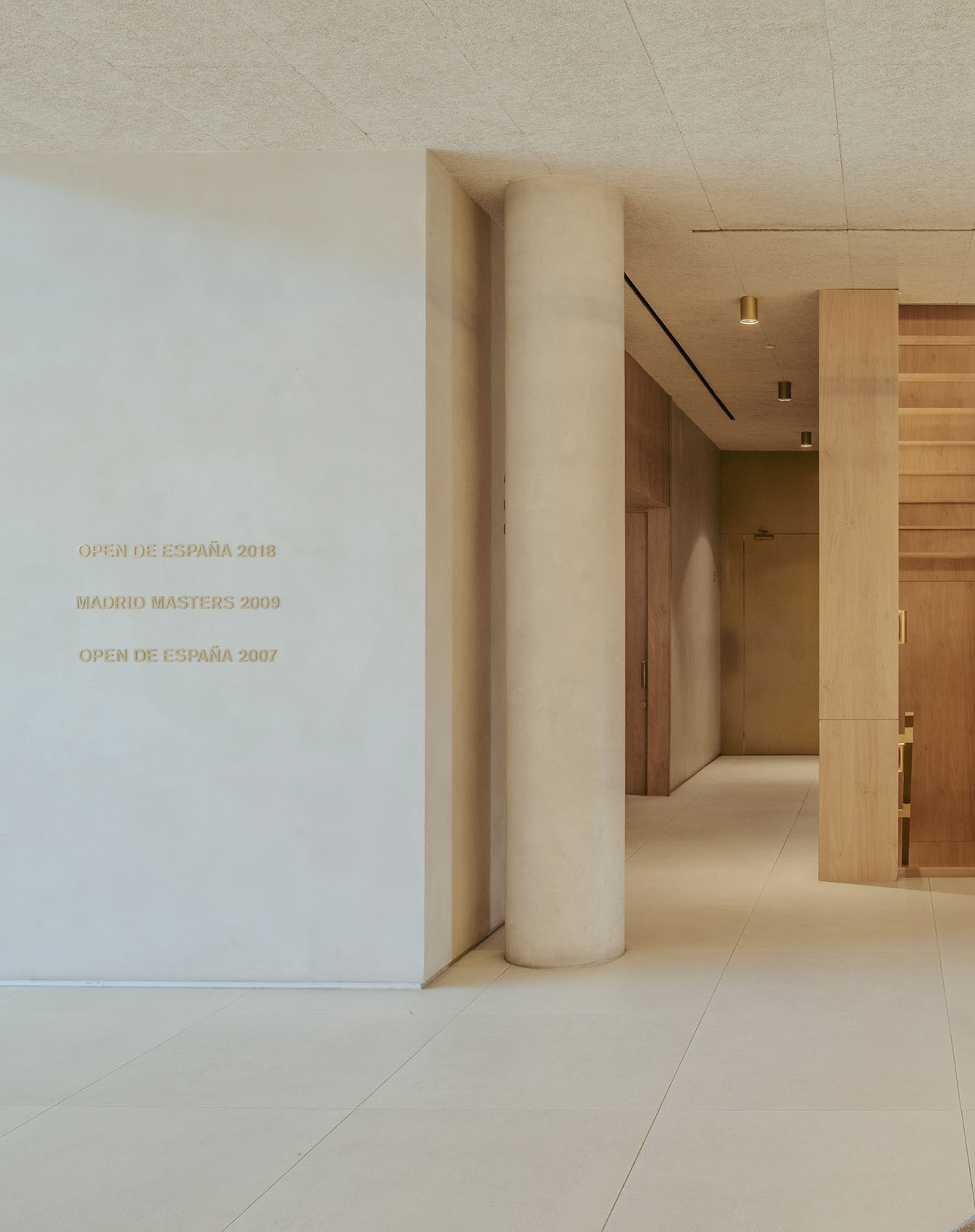
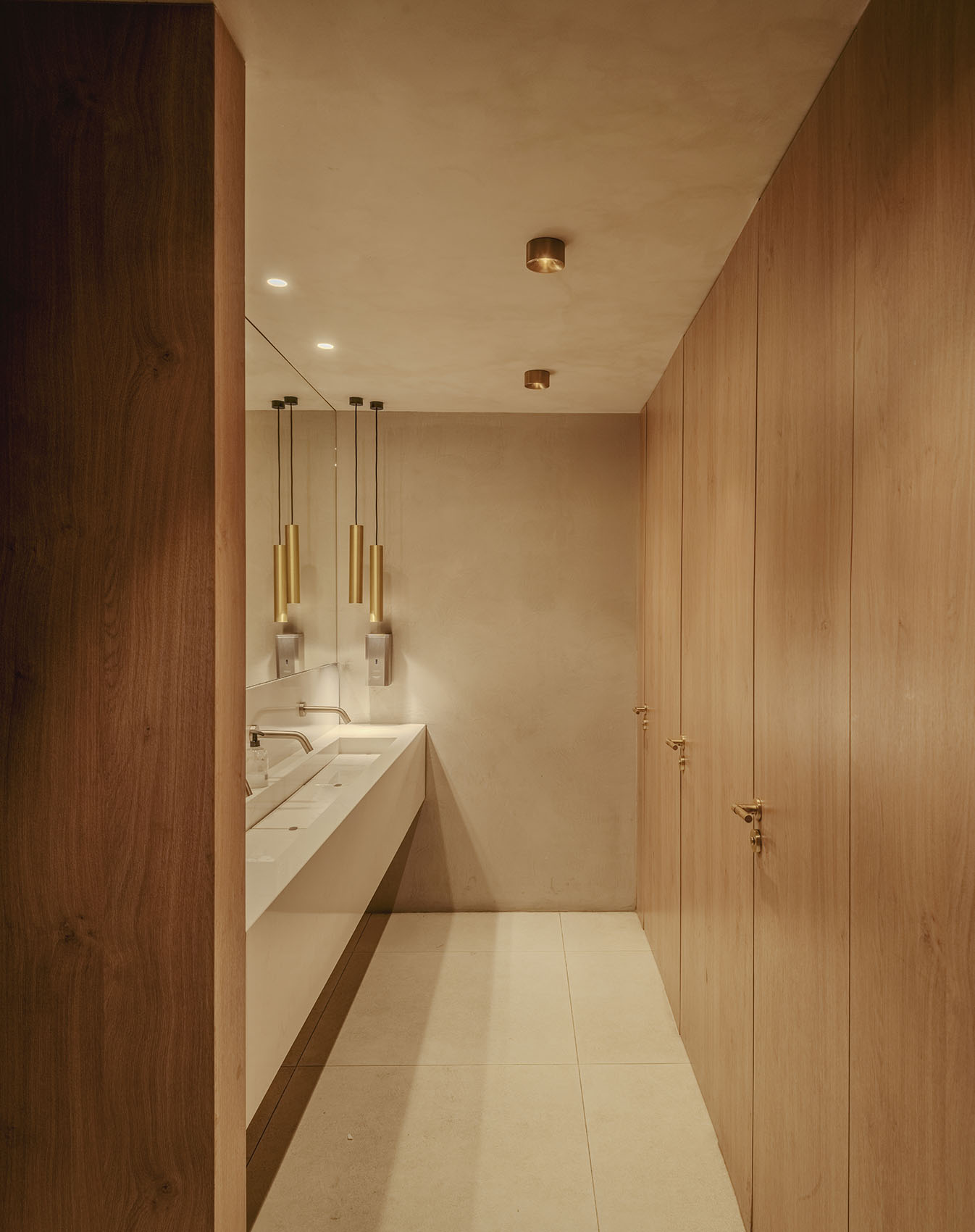
A contained and serene space shaped by light, texture, and proportion.
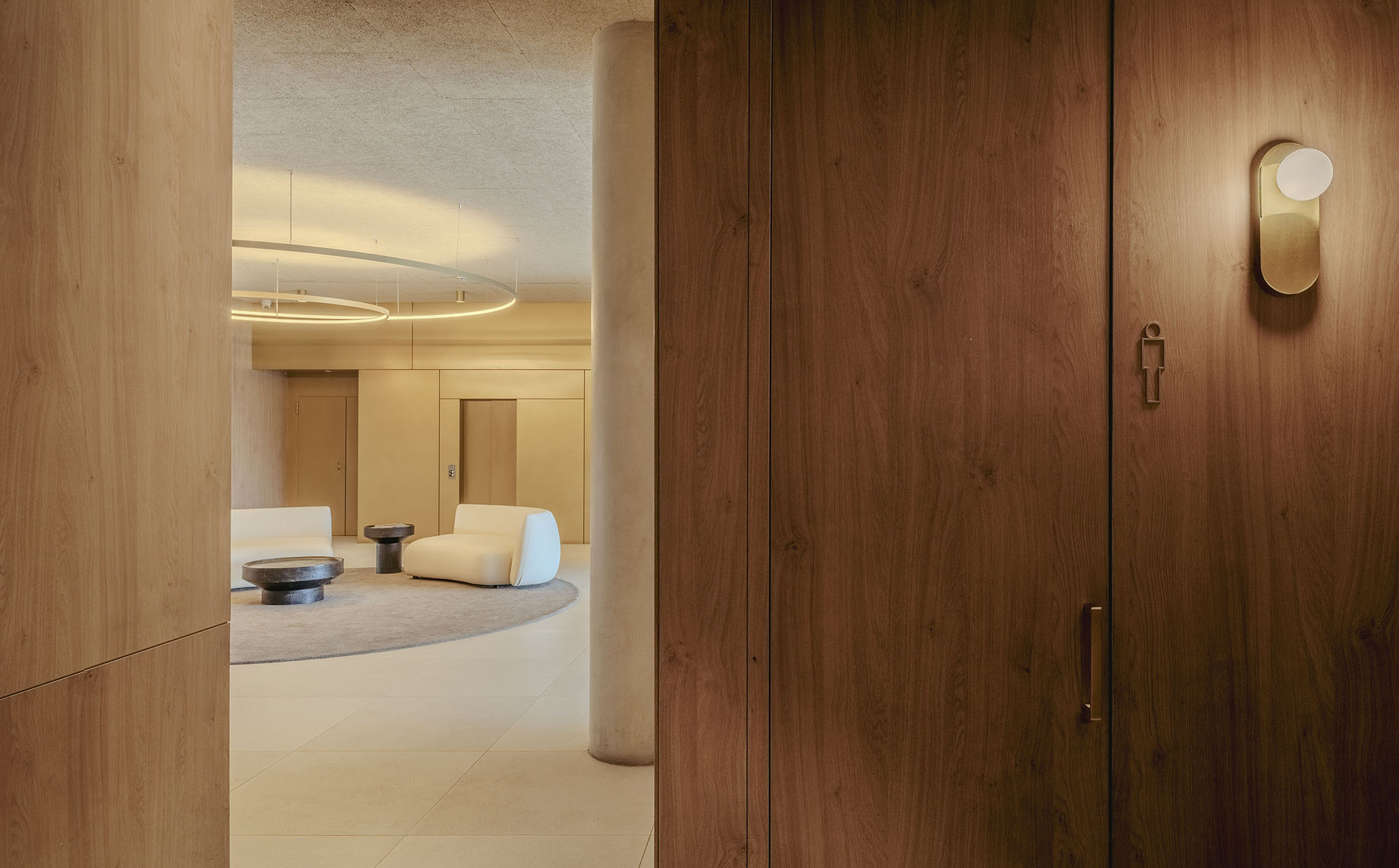
The entrance lobby of the National Golf Center is envisioned as a threshold where the design strategy first explored in the project for the short-stay residence becomes fully tangible.
Wood, lime mortar, bronze cladding, and limestone compose a palette that threads the entire project together. These materials not only define the identity of the welcoming space, but also foreshadow a vertical dialogue with the upper floor, a material promise that gradually unfolds as one moves through the building.
Two oak-paneled walls guide the visitor’s path, opening gently at their end to frame the renewed threshold of the Center. From there, the lobby divides into two distinct moments. The first, more active, gathers movement, image, and memory: an audiovisual installation that captures the universe of golf, and a display case safeguarding pieces from the permanent collection. Both elements rest on mobile systems that allow the space to adapt and transform for various forms of reception. Behind the display, a discreet service stair links the ground-floor kitchen with one of the upper-level offices.
The second realm, more intimate and contemplative, invites one to linger. The continuity of the flooring, a generous suspended lamp, and carefully curated furniture create an interior landscape where each element finds its place and quietly asserts its presence.
From this central nucleus unfold the accesses to offices, restrooms, and the restaurant. The elevator front, sheathed in bronze, and the former staircase—now re-imagined as a self-standing wooden piece with a metal handrail—complete the intervention, adding layers of depth and nuance to the ensemble.
The result is an interior where materiality adopts a domestic, familiar tone. A lobby that moves beyond its role as a functional crossing to become a meaningful piece within the architectural experience of the center.