

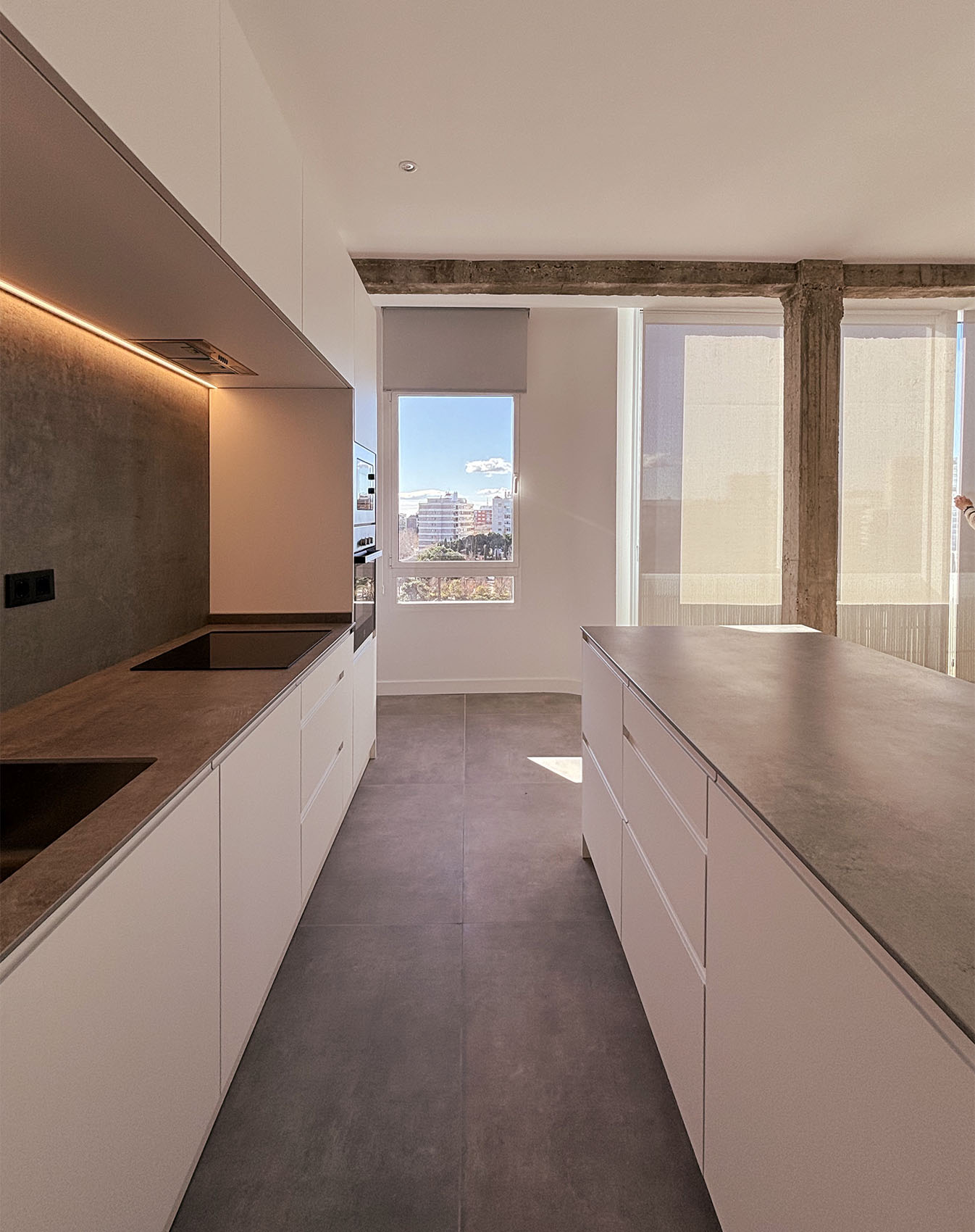
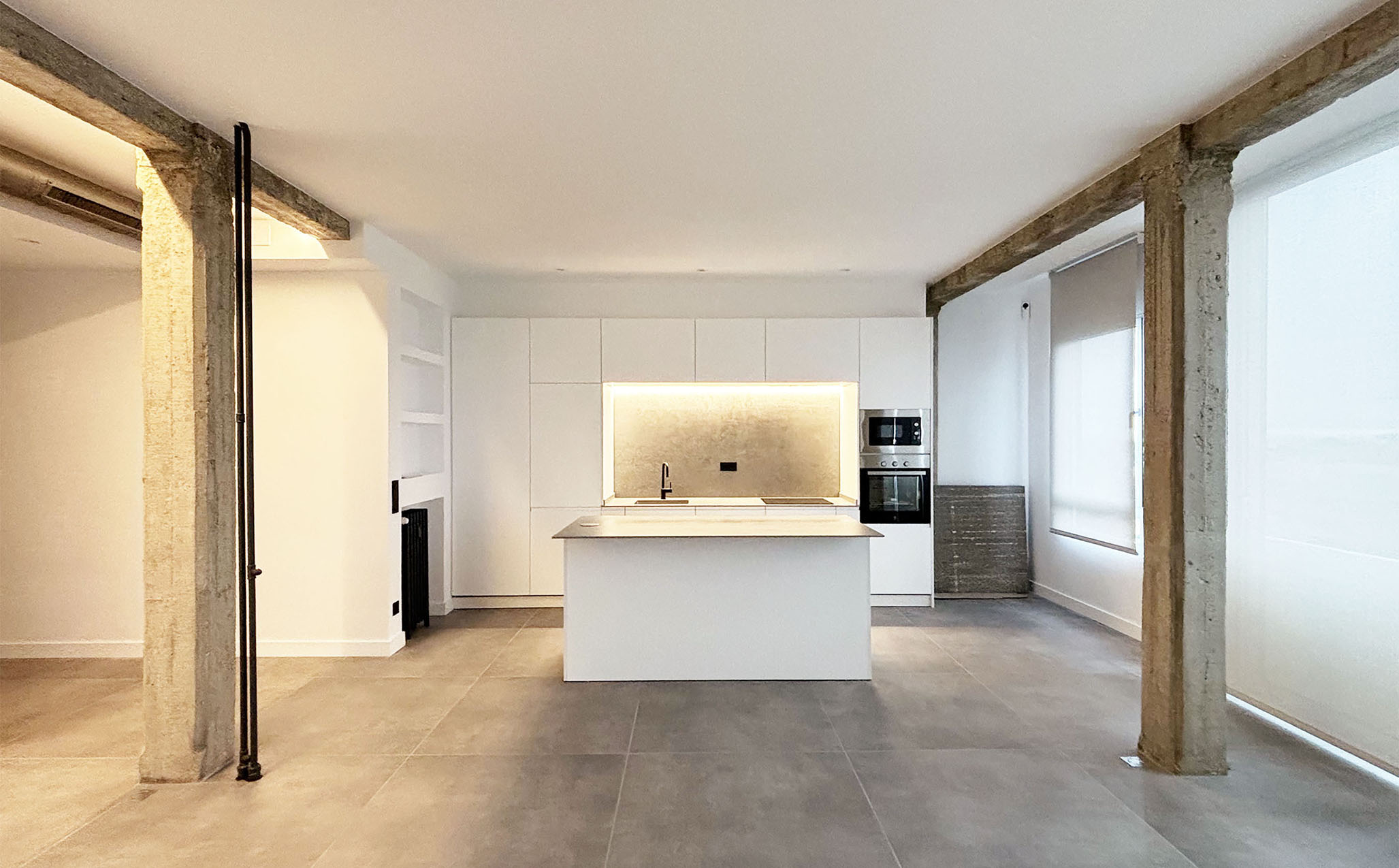
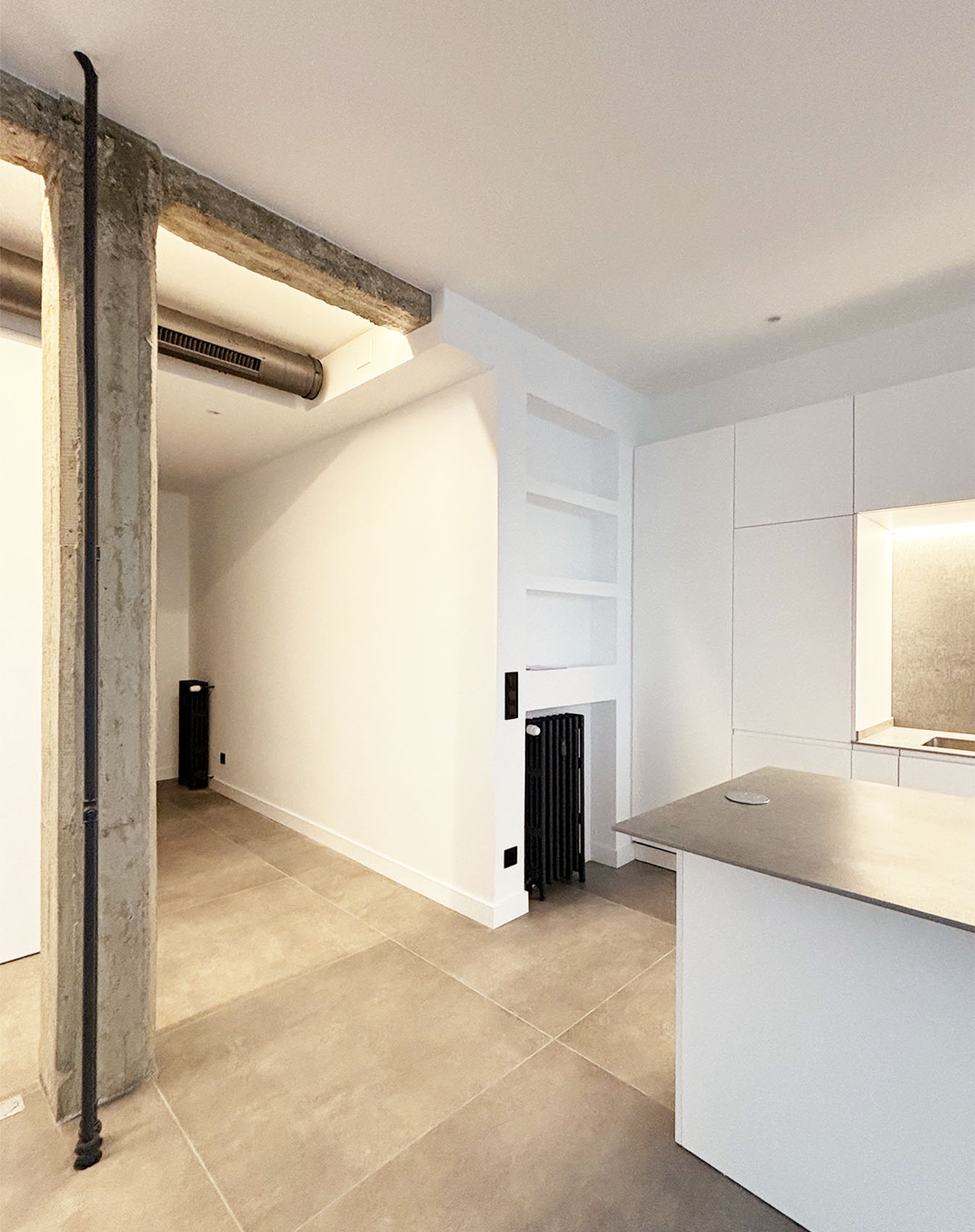
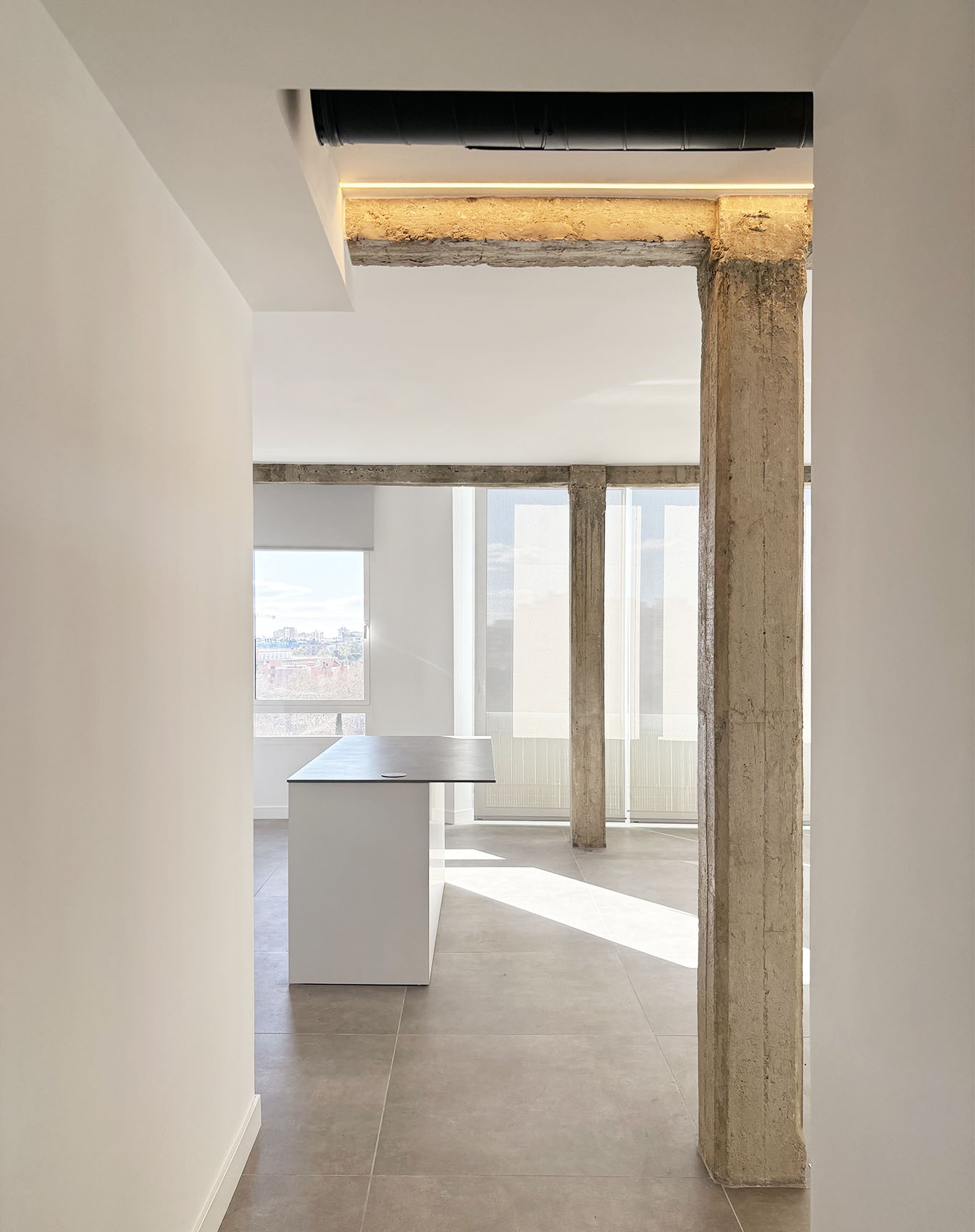
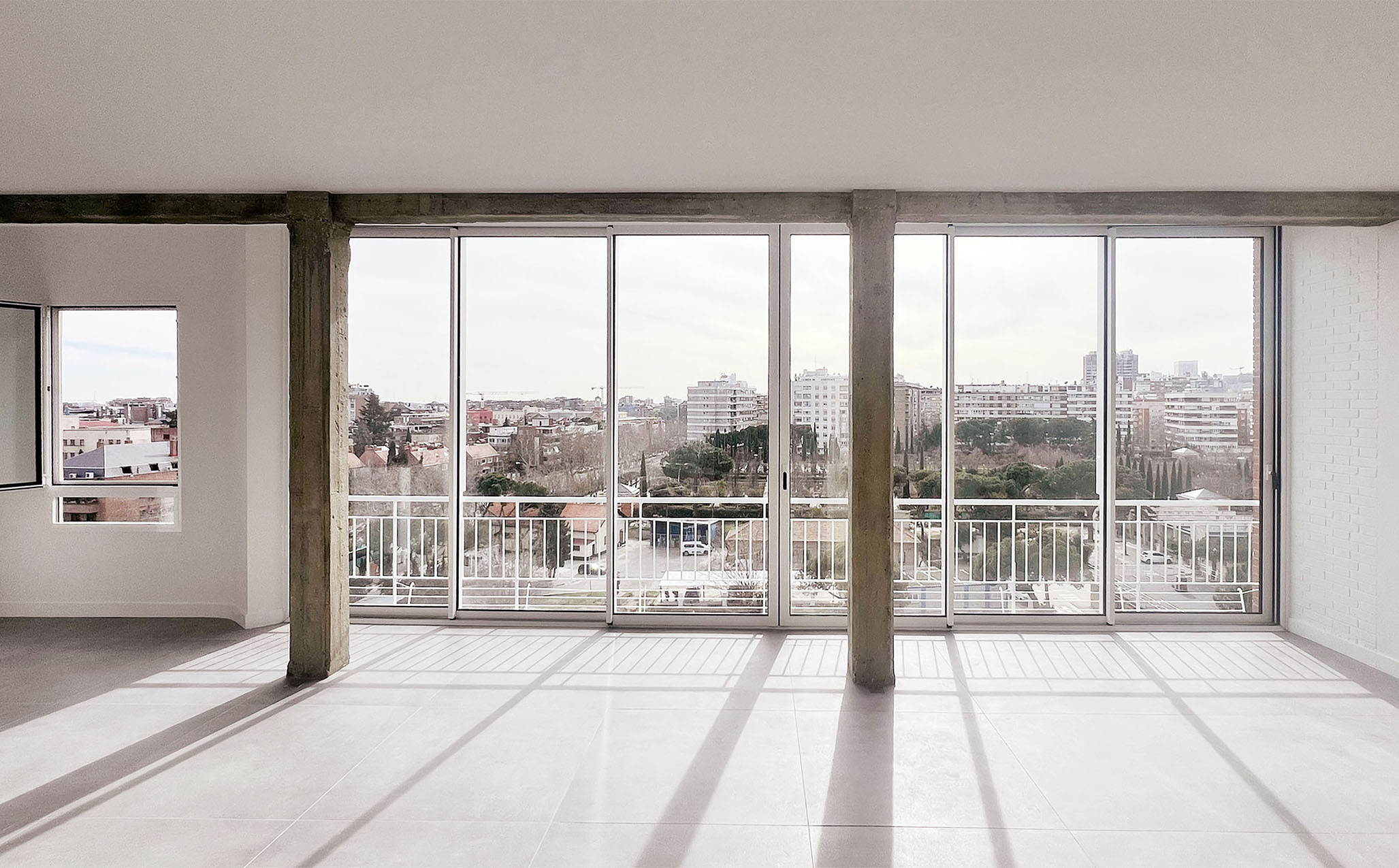
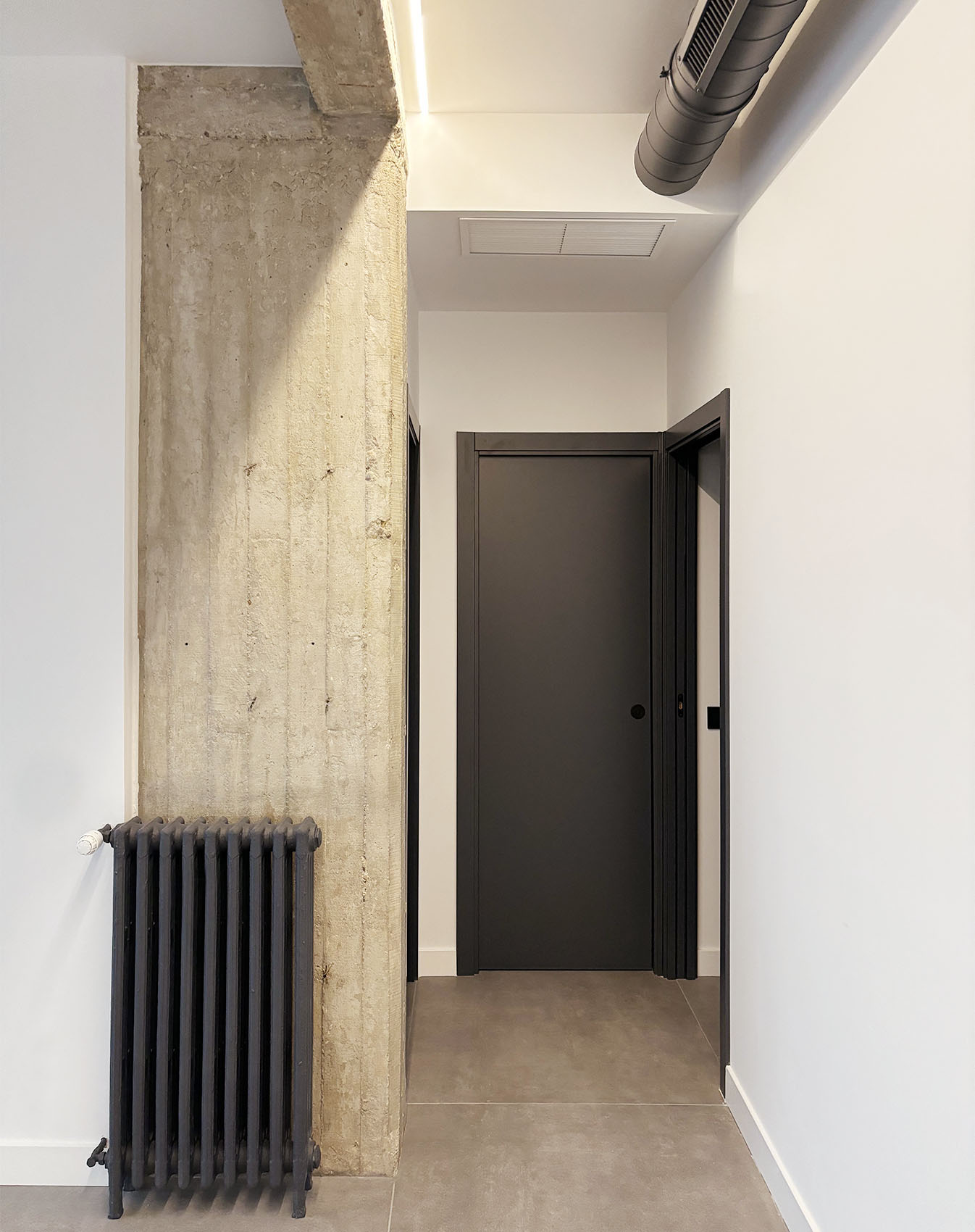
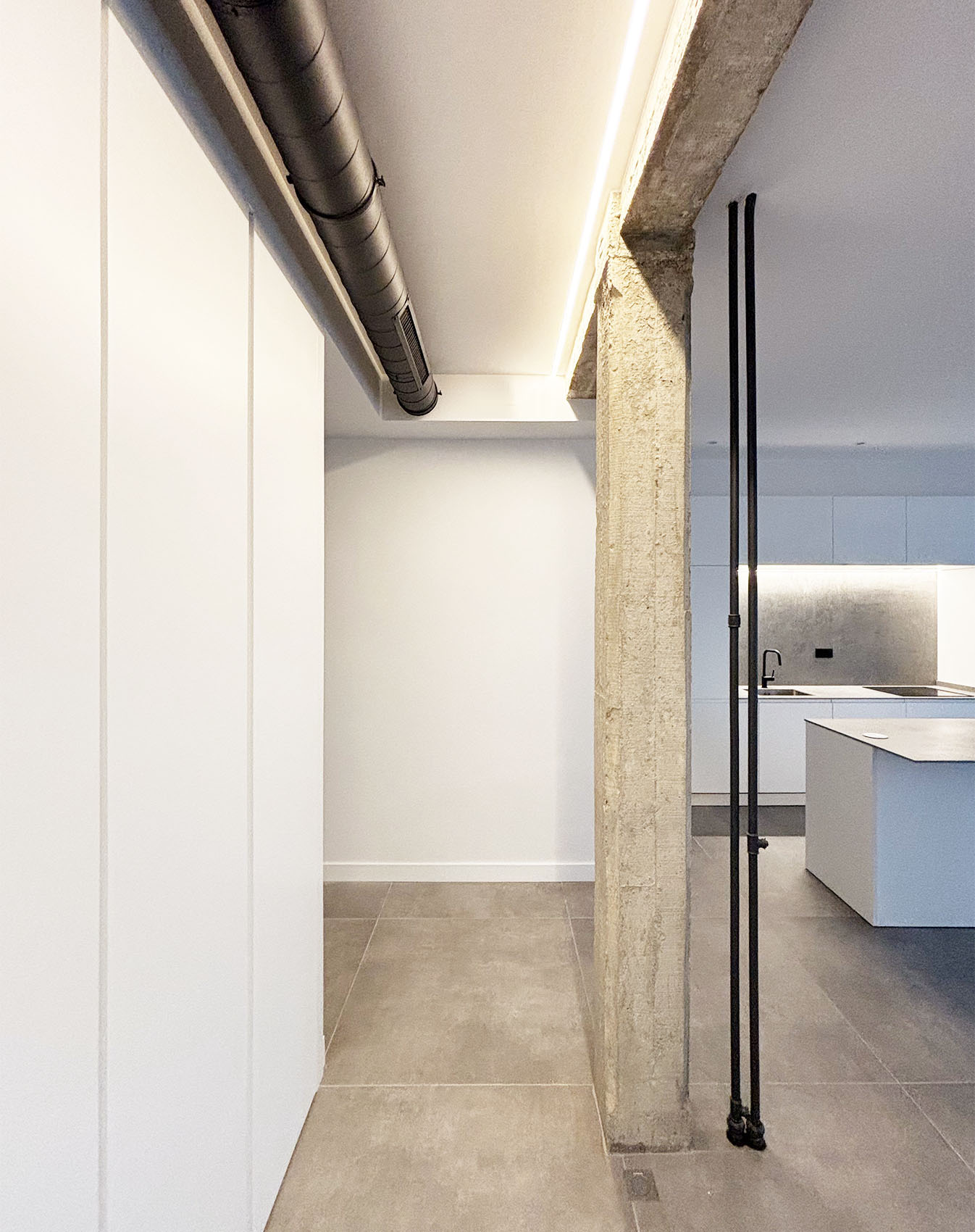
The full renovation of this residence begins with a simple idea: allowing the original structure to breathe again. Rather than concealing it, the project chooses to reveal it, letting the exposed concrete — with its irregular texture and unfiltered memory — set the rhythm of the spaces. What was once a silent element now becomes the guiding thread of the design.
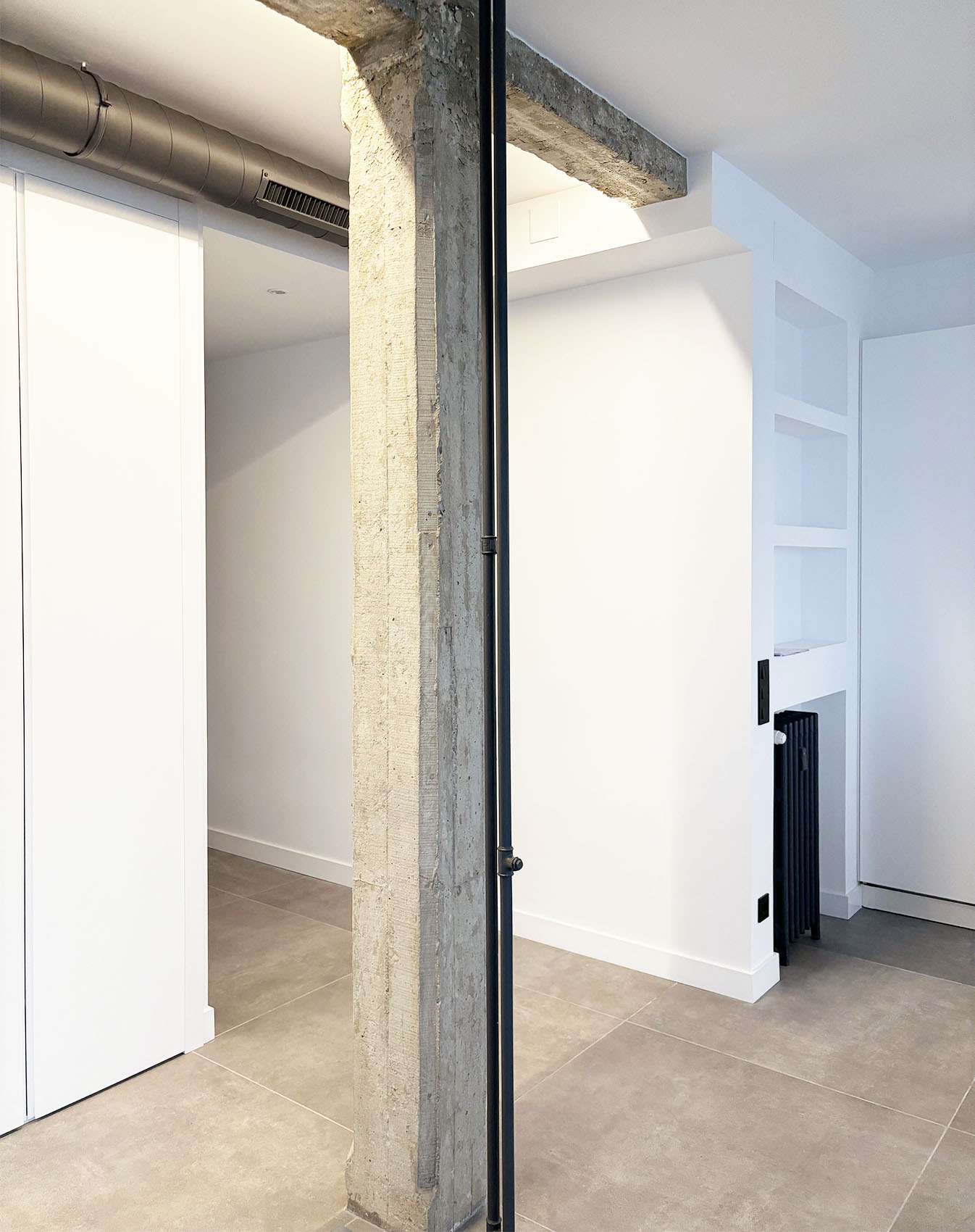
In the entrance and circulation areas, the columns and beams emerge between white surfaces and dark joinery, creating a soft yet intentional contrast. Light, carefully directed, accentuates the verticality of the structure and guides the user toward the main rooms. The continuous flooring and clean lines of the doors bring a sense of order and calm, reinforcing the clarity of the spatial sequence.
As one moves toward the living areas, the space opens up and fills with natural light. Here, the intervention seeks maximum visual transparency: the concrete coexists with a neutral palette and contemporary elements such as the kitchen island, conceived as a lightweight piece that organizes the room without dominating it. Exposed ducts and recessed ceiling planes reveal the building’s infrastructure, integrating it seamlessly into the overall aesthetic.
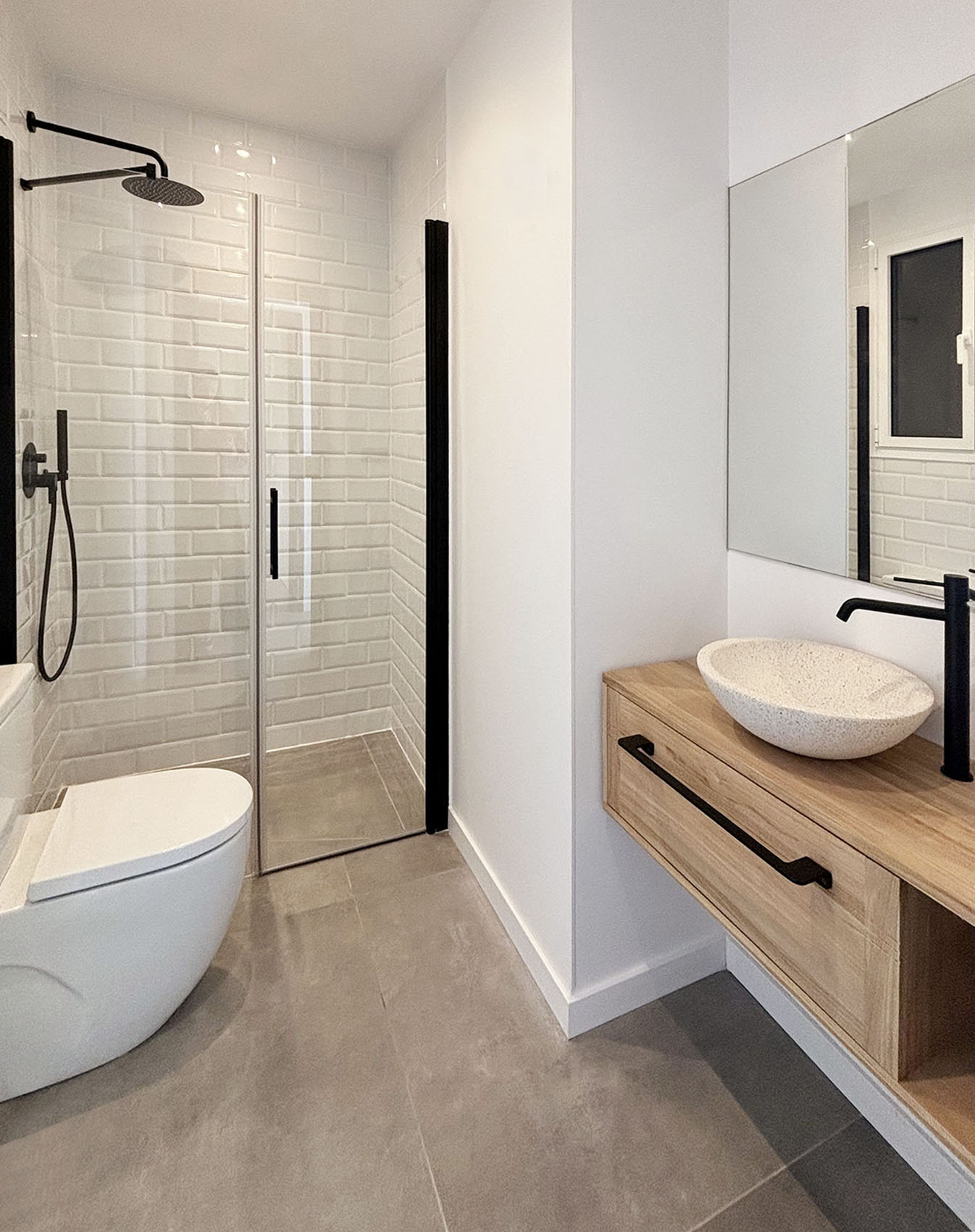
The result is a home that understands renovation not as erasure, but reinterpretation. New and existing elements interlace effortlessly, giving shape to a dwelling where technique becomes language, and where every detail — from the roughness of the concrete to the warmth of the light — contributes to an honest, comfortable, and contemporary atmosphere.El resultado es una vivienda que entiende la reforma como una reinterpretación. Lo nuevo y lo existente se enlazan sin fricciones, dando lugar a un hogar donde la técnica se vuelve lenguaje y donde cada detalle —desde la textura del pilar hasta la calidez de la luz— contribuye a construir una atmósfera honesta, confortable y contemporánea.